From Chaos to Connection
Lesson 1.2: Understanding Motivation & Interest: Light the Spark That Keeps Them Turning Pages

Light the spark that keeps them turning pages
Motivation isn't built through reminders or rewards - it's built through connection
Every child has a natural pull toward certain stories, topics, and characters. When reading taps into that pull, everything shifts:
- attention stretches longer,
- effort feels lighter,
- and joy sneaks back onto the page.
Uncover what truly captivates your child — their fascinations, play themes, and hidden curiosities — and how to keep reading time playful, personal, and full of momentum.
Please review the Learning Objectives.
Mia & The Book That Changed Everything
Six-year-old Mia hated reading time.
Her mom, Jennifer, tried everything: colorful books, rewards for reading, setting a timer, making it “special.” Nothing worked.
Every evening, the same battle:
“Time to read!” “I don’t want to.” “Just five minutes.” Mia sighs dramatically, drags her feet, picks a book without looking, reads in a monotone, asks “Are we done yet?” after two pages.
Jennifer felt defeated. Other kids love reading. Why doesn’t mine?
Then one day, Jennifer noticed something.
Mia was building an elaborate “animal hospital” with her stuffed animals.
She’d been doing this for weeks—making beds, bandaging paws, giving them “medicine,” creating little charts.
“Mia, you really love taking care of animals, don’t you?”
“I want to be a veterinarian when I grow up!”
A light bulb went off.
That afternoon, Jennifer went to the library. “Do you have any books about veterinarians? Or animals being cared for?”
The librarian handed her three books:
Whiskers Gets a Checkup
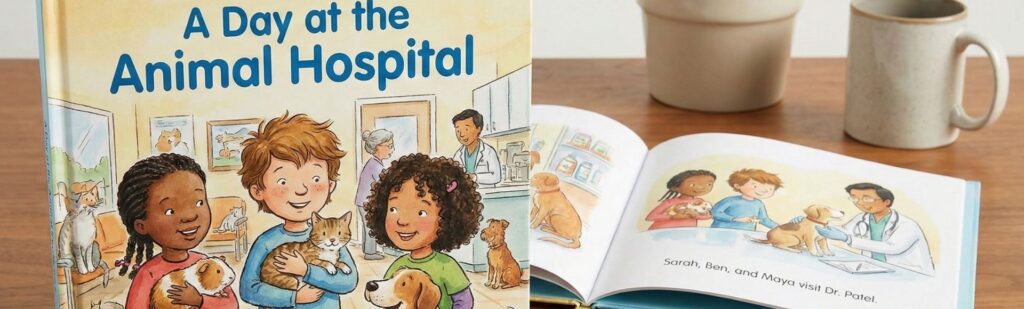
A Day at the Animal Hospital
Doctor Dolittle Helps All Animals
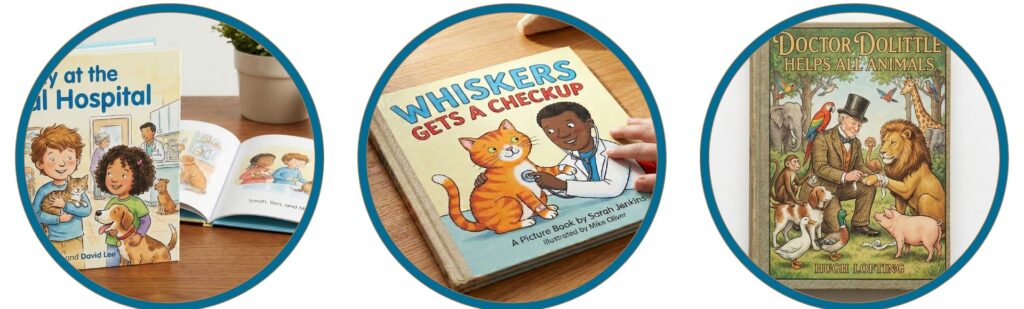
That evening, Jennifer placed all three books in front of Mia. “Pick whichever one you want to read tonight.”
Mia’s eyes lit up. She grabbed A Day at the Animal Hospital.
What happened next stunned Jennifer:
Mia didn’t just tolerate reading. She leaned in. Asked questions. Made connections:
“That’s like what I do with Fluffy!” She asked to read it twice. Then asked if they could read the other two books tomorrow.
Reading time went from battle to joy in one night.
Not because Jennifer found a magic technique. But because she discovered a simple truth:
Motivation isn’t built through reminders or rewards. It’s built through connection.
When reading taps into what a child genuinely cares about, everything changes. Attention stretches. Effort feels lighter. Joy returns.
This lesson will show you how to find YOUR child’s “animal hospital”—the topic, interest, or passion that transforms reading from obligation to intrigue.

Motivation can’t be forced or bribed. But it can be sparked by noticing what naturally draws your child’s attention and offering books that honor those interests.

The Secret Behind Motivation
Kids don’t fall in love with reading because they’re told to. They fall in love because stories connect to who they are.
When a child’s interests meet the right book, curiosity takes over — and learning becomes effortless. Your role is to notice the sparks and fan them into flame.
Together, we’ll explore how to recognize curiosity in action, match books to passions, offer meaningful choice, and respond gracefully when attention fades.

The Four Sparks of Motivation
Building motivation isn’t about pushing harder; it’s about noticing what pulls your child forward. The following four sparks show you how to transform everyday moments of curiosity into lasting engagement.
- Spot the Spark: Observe your child’s spontaneous questions, play themes, and favorite topics to pinpoint authentic curiosities.
- Match Books to Passions: Select stories, characters, and informational texts that mirror those sparks, layering in new but related ideas to gently expand interests.
- Offer Choice & Voice: Provide 2–3 book options, let your child pick the order, and invite them to set reading goals; ownership boosts intrinsic motivation.
- Read the Engagement Cues: Notice body language, energy shifts, and comments; pivot quickly—change voices, shorten sessions, or try a different genre—when attention wanes.
Why Rewards Don't Work
Many parents start with rewards
Many parents start with rewards:
“Read for 20 minutes, get screen time!”
“Finish this book, choose a treat!”
Sticker charts for books completed
Why this backfires:
Research shows that external rewards kill intrinsic motivation. Here’s what happens:
Without rewards
Without rewards:
- Child reads because they enjoy it
Reading is its own reward
Motivation is internal and lasting
With rewards
With rewards:
Child reads to GET the reward
Reading becomes work (the price for the prize)
When rewards stop, reading stops
Motivation is external and fragile
The data: Studies show children who are rewarded for reading:
Read less when rewards end
Choose easier books (to finish faster)
Enjoy reading less over time
See reading as a chore, not pleasure

The Interest-Engagement Connection
When you read books about topics you care about:
Time flies
You remember what you read
You seek out more books on the topic
Reading feels energizing, not draining
When you read books that don’t interest you:
Time drags
Your mind wanders
You forget what you read
Reading feels like work

Your child is no different than you!
Your job: Help them find those books.

SPARK #1: Spot the Spark
The principle: Your child is already showing you what interests them—through play, questions, choices, and obsessions. Your job is to notice.
Where to Look for Sparks:
1. Play Themes
Watch how your child plays when no one is directing them:
What do they pretend?
Playing “restaurant” → Food, cooking, business
Building elaborate structures → Engineering, architecture, construction
Caring for stuffed animals → Animals, nurturing, medicine
Pretending to be superheroes → Heroes, powers, good vs. evil, justice
What characters do they become?
Always the doctor/teacher/scientist → Helping professions, expertise
Always the explorer/adventurer → Discovery, nature, travel
Always the royal family → Royalty, elegance, power dynamics
- Always animals → Animal behaviors, survival, habitats
Example: Seven-year-old Lucas spends hours building intricate “traps” and “inventions” with household items.
He’s constantly asking “What if…” questions about mechanisms.
The spark: Engineering, problem-solving, inventions
Books that match:
Rosie Revere, Engineer
Whoosh! Lonnie Johnson’s Super-Soaking Stream of Inventions
The Most Magnificent Thing
How Things Work (DK)
2. Questions They Ask
Notice what they wonder about unprompted:
Curiosity themes:
“Why is the sky blue?” → Science, nature, how things work
“Where do we go when we die?” → Philosophy, spirituality, life’s big questions
“How do planes stay up?” → Physics, engineering, flight
“Why can’t we have a pet dragon?” → Fantasy, animals, what’s real vs. imaginary
Example: Five-year-old Aisha constantly asks about the ocean: “How deep is it? What lives at the bottom? Why is it salty?”
The spark: Ocean life, marine biology, deep-sea exploration
Books that match:
Commotion in the Ocean (rhyming, fun)
Over and Under the Waves
National Geographic Readers: Dolphins
The Pout-Pout Fish (character, adventure)
3. Screen Time Choices
What they choose when given free screen time reveals interests:
Patterns to notice:
Always watches cooking shows → Food, recipes, creating
Always plays building games → Construction, design, spatial thinking
Always watches animal documentaries → Animals, nature, science
Always plays story-based games → Narrative, character, adventure
Example: Nine-year-old Marcus watches YouTube videos about space, planets, and astronauts for hours.
The spark: Space, astronomy, exploration
Books that match:
Mousetronaut series
George’s Secret Key to the Universe
National Geographic Readers: Planets
Hidden Figures (picture book version)
4. Collections & Treasures
What do they save, collect, or treasure?
Collections reveal:
Rocks and shells → Geology, nature, collecting
Small toys of one type → Organization, categorization, expertise
Art supplies → Creativity, making, artistic expression
Sports cards → Statistics, competition, heroes
Example: Six-year-old Emma has a box full of “special rocks” she’s found. She knows where each came from and what makes it special.
The spark: Geology, rock collecting, earth science
Books that match:
Sylvia and Aki
Everybody Needs a Rock
National Geographic Readers: Rocks and Minerals
If You Find a Rock
5. Repeated Topics
What do they bring up in conversation again and again?
Notice the themes:
Always talking about fairness → Justice, rules, equity
Always talking about their pet → Animals, care, responsibility
Always talking about their favorite sport → Athletics, teamwork, competition
Always telling stories about friends → Relationships, social dynamics, feelings
Example: Eight-year-old Sofia constantly brings up stories of “mean kids” and “unfairness” at school.
The spark: Social justice, fairness, standing up for others
Books that match:
Each Kindness
The Invisible Boy
Wonder (for older readers)
Last Stop on Market Street
How to Spot the Spark:
The 10-Minute Observation Exercise:
Set a timer for 10 minutes. Watch your child during free time (play, conversation, screen time).
Ask yourself:
What are they doing without being asked?
What questions are they asking?
What themes keep appearing?
What do they return to again and again?
Write down 3-5 specific things you notice.
Then ask: “What’s the underlying interest here?”
Example: Child is lining up toys, organizing them by size, making “stores.”
Underlying interests: Organization, business, categorization, systems
Books that match:
Bunny Money (shopping, money)
Lemonade in Winter (business, entrepreneurship)
Those Shoes (wanting vs. needing, economics)
SPARK #2: Match Books to Passions
The principle: Once you know what interests your child, strategic book selection becomes your superpower.
How to Find the Right Books:
Strategy #1: Ask Your Librarian
Librarians are book-matching EXPERTS. They do this all day, every day.
What to say:
“My child loves [dinosaurs]. What books combine dinosaurs with [adventure/humor/facts]?”
“My 6-year-old is obsessed with [horses]. What are your best horse books for beginning readers?”
“My child asks endless questions about [how things work]. What do you recommend?”
Why this works: Librarians know hundreds of books by theme, interest, and level. They’ll give you multiple options immediately.
Strategy #2: Search Smart Online
Effective searches:
“[child’s interest] + picture books”
“[child’s interest] + early readers”
“[child’s interest] + middle grade novels”
Example:
“Dragons + early readers” → Discovers Dragon Masters series
“Cooking + picture books” → Finds Dragons Love Tacos, Pancakes for Breakfast
“Soccer + chapter books” → Finds Soccer on Sunday, Under the Soccer Moon
Where to search:
Goodreads lists
Your library’s catalog
Common Sense Media
We Are Teachers book lists
- Various AIs such as Google Gemini
Strategy #3: Look Beyond Fiction
Critical insight: Many children (especially boys, research shows) prefer non-fiction.
If your child loves [topic], try:
DK Eyewitness Books (visual, fact-rich)
National Geographic Kids (photos, engaging facts)
Usborne See Inside Books (interactive)
Who Was…? biographies
Magic School Bus (science + story)
Example: Child who “hates reading” devours every National Geographic Kids book about animals. That IS reading!
Strategy #4: Series Are Your Friend
Why series work for motivation:
Reduce decision fatigue (child knows what comes next)
Build confidence (child knows the characters, style, difficulty)
Create momentum (child wants to know what happens next!)
Make reading feel like a friend, not a chore
Popular series by interest:
Animals:
Puppy Place
Horse Diaries
Warriors
How to Speak Dolphin
Adventure:
Magic Tree House
The Wild Robot
Hatchet series
Percy Jackson
Humor:
Diary of a Wimpy Kid
Dog Man
Captain Underpants
Big Nate
Mystery:
Boxcar Children
Nancy Drew / Hardy Boys
39 Clues
Encyclopedia Brown
Once they love one book in a series: The rest are easy sells!
Strategy #5: The 3-Level Approach
Match difficulty to interest level:
High interest topic: Child can read slightly above their “level”
Motivation pulls them through harder words
- Vocabulary builds because they WANT to understand
Medium interest topic: Stay at their comfortable level
Don’t add difficulty on top of lukewarm interest
Low interest topic: Go easier
If you must read something they’re not into, make it EASY so skill isn’t a barrier too
Example: Child reads at level J but is obsessed with space. Offers level L space book. Child pushes through because they’re motivated. Success!
Same child, neutral about fairy tales. Offers level J fairy tale book. Appropriate match.
Same child, dislikes historical fiction. If required for school, finds level H-I historical fiction. Reduces resistance.
The Book-Matching Formula:
Interest + Appropriate Level + Series Potential = Motivation Gold
Example: 7-year-old who loves animals + Early Reader level + Puppy Place series = Child reads 10 books in a month
SPARK #3: Offer Choice & Voice
The principle: Even small choices dramatically increase intrinsic motivation. When children feel agency over their reading, they engage more deeply.
Why Choice Matters:
Research shows: When children choose their own books, they:
Read 40% longer
Comprehend better
Remember more
Are more likely to finish
Develop stronger reading identity
Why it works:
Ownership creates investment
Choice signals respect for their preferences
Autonomy satisfies a core psychological need
They’re reading books they actually want to read!
How to Offer Choice (Without Losing Control):
The key: Bounded choice. You curate options; they choose within those options.
Strategy #1: The 3-Book Choice
How it works:
You select 3 books you’re comfortable with (appropriate level, content, etc.)
Child picks which one to read
- Child feels empowered; you maintain quality control
What to say:
“I found three books I think you’ll love. Which one looks most interesting?”
“We can read any of these three tonight. You pick!”
“Which of these do you want to start with?”
Example: Parent selects three dinosaur books (child’s current obsession), all at appropriate level. Child chooses the one with the T-Rex on the cover. Reads eagerly.
Strategy #2: The Order Choice
How it works:
You’ve chosen the books for the week
Child decides what order to read them
What to say:
“We’ll read all three of these this week. Which do you want to read first?”
“I got these from the library. Which looks best for tonight?”
Why it works: Child has control over their experience without you losing any
Strategy #3: The Setting Choice
How it works: Child chooses where/how to read (within reason)
Options to offer:
“Want to read in your bed or on the couch?”
“Should we snuggle or sit side-by-side?”
“Inside or outside today?”
“Should I read to you, or do you want to try reading to me?”
Why it works: Physical comfort and autonomy increase engagement
Strategy #4: The Re-Read Choice
How it works: Child chooses whether to read book once or twice (or three times!)
What to say:
“We finished the book! Want to read it again or move to a new one?”
“This is your favorite. Should we read it one more time tonight?”
Why it works:
Honors child’s love of repetition
Re-reading builds fluency
Child feels heard
Important: Many children LOVE re-reading favorites. That’s not boring—that’s building confidence!
Strategy #5: The Rating Choice
How it works: After reading, child rates the book
Options:
Thumbs up / thumbs down
1-5 stars
Smiley / neutral / sad face
“Would you read another book like this?”
Why it works:
Validates their opinion
Helps you learn their preferences
Makes them feel like an expert
Builds critical thinking
What to say:
“What did you think? Thumbs up or thumbs down?”
“How many stars out of 5 would you give this book?”
“Should I find more books like this one?”
Voice Beyond Choice:
Let them contribute:
“What book should I get from the library this week?”
“You’re the expert on trucks. Which book would teach me the most?”
“What do YOU think we should read together?”
“Should we make a reading goal for this week?”
Setting reading goals together:
“How many books do you want to read this week?” (Let THEM suggest!)
“Want to try to finish this chapter book by Friday?”
“Should we read 10 minutes or 15 minutes tonight?”
When THEY set the goal: They’re more motivated to reach it.
SPARK #4: Read the Engagement Cues
The principle: Your child’s body language, energy, and comments tell you when to keep going and when to pivot. Learn to read these cues and respond quickly.
Engagement Signs (Keep Going!):
Physical cues:
✅ Leaning in toward the book
✅ Eyes on the page or pictures
✅ Still body (not fidgeting)
✅ Relaxed posture
✅ Moving closer to you
Verbal cues:
✅ Asking questions (“Why did he do that?”)
✅ Making predictions (“I think the dragon will help them!”)
✅ Making connections (“That’s like when we…”)
✅ Commenting on the story (“Whoa!” “Oh no!” “That’s funny!”)
✅ Asking to continue (“Keep reading!” “One more page!”)
Emotional cues:
✅ Laughing at funny parts
✅ Gasping at surprising moments
✅ Looking worried during tense scenes
✅ Smiling
✅ Expressing feelings (“I’m scared for her!” “I hope he wins!”)
When you see these: You’ve found the right book at the right time. Keep going!
Disengagement Signs (Time to Pivot!):
Physical cues:
❌ Looking away frequently
❌ Fidgeting, squirming, shifting position constantly
❌ Playing with hair, fingers, nearby objects
❌ Yawning
❌ Body turned away from book
❌ Getting up frequently
Verbal cues:
❌ One-word answers
❌ “Are we done yet?”
❌ “How many pages left?”
❌ No response to questions
❌ Changing the subject
❌ Asking to do something else
Emotional cues:
❌ Sighing
❌ Glazed-over eyes
❌ Irritability
❌ Sudden need for bathroom/water (avoidance)
❌ Whining
When you see these: Don’t push through. The book isn’t working right now. Pivot!
Quick Pivots When Engagement Drops:
Pivot #1: The Voice Change
Pivot #1: The Voice Change
Add silly character voices
Whisper dramatically
Use accents
Make sound effects
Sing instead of read
When it works: Book is good, delivery needs energy
Pivot #2: The Skip Ahead
Pivot #2: The Skip Ahead
“Want to skip to the exciting part?”
“Let’s jump to where the action happens!”
“Should we read the end first?”
When it works: Book is too slow, child needs momentum
Pivot #3: The Physical Shift
Pivot #3: The Physical Shift
Stand up and act out scenes
Use stuffed animals as characters
Draw what’s happening
Build what’s described with blocks/Lego
Go outside and read there
When it works: Child needs movement, not more sitting
Pivot #4: The Honest Check-In
Pivot #4: The Honest Check-In
“This book isn’t grabbing you, is it?”
“Want to try a different book?”
“I don’t think this is the right book for today. What sounds better?”
When it works: Book is genuinely not the right match
Critical: This is NOT failure. This is responsive parenting!
Pivot #5: The Shorten & End on Success
Pivot #5: The Shorten & End on Success
“Let’s read just one more page and end there.”
“We’ll stop at the end of this chapter.”
“You worked hard today. Let’s finish with something easy and fun.”
When it works: Child is tired, frustrated, or maxed out
Important: Better to end on a good note than push through to misery.
The Engagement Detective Checklist:
The Engagement Detective Checklist:
During reading, watch for:
☐ Are they leaning in or pulling away?
☐ Are their eyes on the page or wandering?
☐ Are they asking questions or silent?
☐ Are they reacting emotionally or checked out?
☐ Are they requesting more or asking if you’re done?
If 3+ disengagement cues: Pivot immediately. Don’t wait.
From Obligation to Intrigue
Before:
“Time to read!” = Groans, resistance, battles
Reading time = 10 minutes of struggle
Child sees books as homework
Parent feels frustrated and defeated
Child says “I hate reading”
After:
- “I found a book about [child’s interest]!” = Excitement
Reading time = Child asks for more
Child sees books as doors to what they love
Parent feels energized and successful
Child says “Can we read another one?”
The difference: Connection to interest.
The Three Magic Moments:
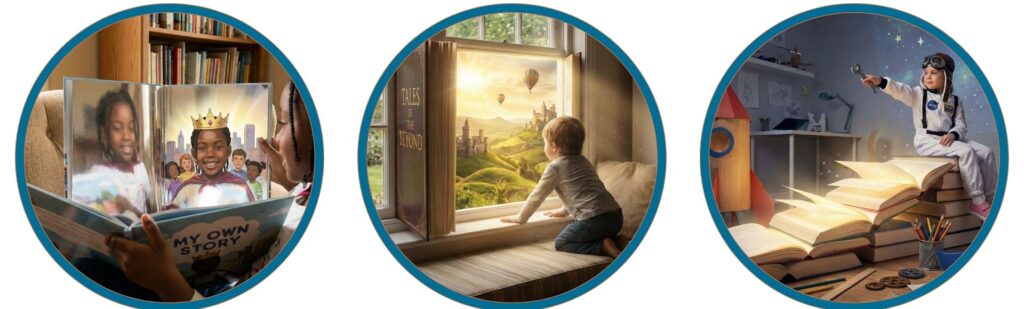
1. When Books Become Mirrors
“This character is just like me!”
Child sees themselves in stories
Feels understood and validated
Develops reading identity
2. When Books Become Windows
“I didn’t know that was possible!”
Child discovers new ideas
Expands worldview
Builds empathy and curiosity
3. When Books Become Launchpads
“I want to try that!”
Child is inspired to create, explore, act
Reading becomes fuel for living
Motivation is self-sustaining
Finish Course Early?
You have not completed all required lessons and assessments.