Lesson 2.2 – Choosing Developmentally Appropriate Books
Find the “just-right” stories for growth
A well-chosen book sparks confidence, curiosity, and joy. In this lesson, you’ll learn how to select books that match your child’s current reading skills and stretch their imagination—without overwhelm. You’ll discover the two essential kinds of reading experiences all children need and a simple system for identifying the “Goldilocks” book level.

Key Points:
- Gauge the “Goldilocks Zone”: Use the comfort / stretch / frustration rubric to choose texts that are challenging enough to promote growth but still feel achievable and fun.
- Match Format to Stage: Board books, picture books, early readers, and chapter books each support specific motor, attention, and language milestones—progress gradually.
- Balance Complexity & Familiarity: Look for engaging plots with predictable patterns, supportive illustrations, and limited new vocabulary (around 3–5 unfamiliar words per read-aloud).
- Center Interest & Identity: Prioritize characters, themes, and cultural representations that mirror your child’s experiences and open windows to new perspectives.
When your selections honor both your child’s developmental readiness and personal passions, reading time transforms into an empowering adventure they’ll beg to revisit again and again.
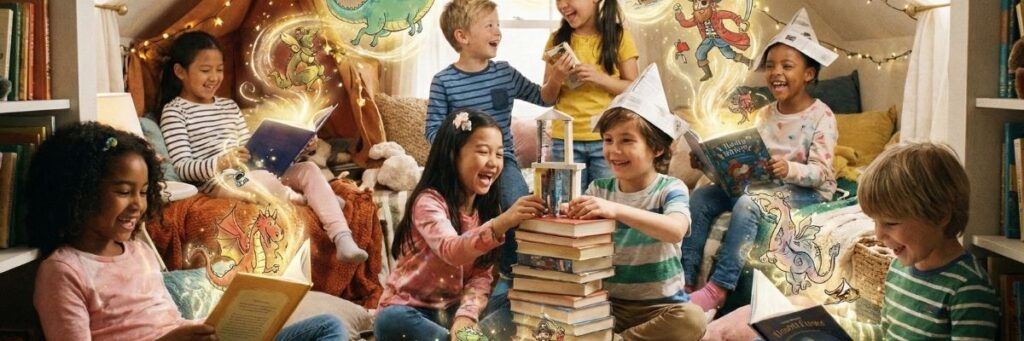
Finding the just-right book is like finding a key that unlocks your child’s curiosity and confidence. Before we go further, let’s clarify the two different “libraries” every child needs. Understanding this difference unlocks smoother, more joyful reading sessions.
The Arithi Family & The Books That Finally Clicked
Eight-year-old Amara loves stories but hates reading. The “easy” books bore her. The “interesting” books frustrate her. Every library trip ends in a fight—until a librarian reveals the one mistake almost every parent makes when choosing books.
Part 1: When Every Book Is Wrong
Part 1: When Every Book Is Wrong
Eight-year-old Amara Arithi loves stories. But she hates reading.
Her mom, Njeri, doesn’t understand it. “You love when I read to you! Why won’t you read on your own?”
Every week at the library, the same battle:
Amara grabs books with beautiful covers—fantasy novels with dragons, mysteries with clever kids solving crimes. Books for 5th and 6th graders.
Njeri steers her toward the “2nd Grade Readers” shelf. Simple sentences. Controlled vocabulary. Books with titles like “Ben and the Big Dog.”
“These are boring, Mom. I don’t want baby books.”
“But these are at your level! The other books are too hard for you.”
They check out three books from the 2nd grade shelf. At home, Amara opens one, reads two pages with enormous effort, and closes it. “This is stupid. The dog gets lost and then they find him. That’s it?”
The books sit untouched all week.
Njeri feels stuck. The “easy” books bore Amara to tears. The “interesting” books are way above her reading level—she can barely decode a sentence. Either way, Amara refuses to read.
Reading time becomes battle time.
Part 2: The Librarian Who Saw Both Problems
One Saturday, a children’s librarian named Ms. Chen notices the Arithis at the shelf, having their usual disagreement.
“Can I help you find something?”
Njeri explains: “My daughter loves exciting stories, but she’s reading at a 2nd grade level. Everything at her level is too simple, and everything interesting is too hard.”
Ms. Chen nods. “I see this all the time. You’re both right—and you’re both solving the wrong problem.”
She asks Amara: “What are you interested in?”
“Mysteries. And magic. And kids who do cool stuff.”
Ms. Chen asks Njeri: “What’s Amara’s reading level?”
“She’s working on Level J books—early 2nd grade readers.”
“Okay,” Ms. Chen says. “Here’s what’s happening. Amara needs TWO completely different kinds of books.”
She pulls a book off the shelf: The Magic Tree House series.
“This is for Amara to READ. It’s Level M—just a bit of a stretch from Level J. It has short chapters, simple sentences, but exciting plots. There’s magic AND adventure AND real history. She can handle this with some support from you.”
Then she walks to a different section and pulls The Wild Robot.
“This is for YOU to READ TO AMARA. It’s 5th grade reading level, but the story is incredible. She’ll love listening to it, and she’ll learn new vocabulary and complex story structure. You read it aloud—she doesn’t have to struggle through it.”
Njeri looks skeptical. “So… two different kinds of books?”
“Exactly. Kids need books they can READ independently to build skills. And they need books that stretch their imagination that YOU read to them. Stop trying to find one book that does both—it doesn’t exist for most kids.”
Part 3: The Week That Changed Reading Time
Njeri checks out both books.
That evening, she tries something new.
First, she reads one chapter of The Wild Robot aloud to Amara. Amara is mesmerized. The vocabulary is sophisticated—words like “peculiar” and “camouflage”—but Njeri pauses naturally to explain them.
“Can we read another chapter?” Amara begs.
“Tomorrow,” Njeri promises. “But now it’s your turn to practice reading.”
She hands Amara Magic Tree House: Dinosaurs Before Dark.
Amara opens it skeptically. But as she starts reading, something shifts. The sentences aren’t too simple—there are challenging words like “Pteranodon” and “ancient”—but she can figure them out. And the story? Jack and Annie travel back in time to see real dinosaurs.
She reads for 15 minutes without complaining once.
When she closes the book, she asks: “Can we go back to the library and get more of these?”
Part 4: Two Months Later
Reading time is no longer a battle.
Every night, Njeri reads one chapter of a “Read-To” book aloud—they’ve moved from The Wild Robot to Charlotte’s Web to The One and Only Ivan. Amara listens, asks questions, and learns new words in context.
Then Amara reads for 20 minutes from her “Read-By” books—she’s working through the Magic Tree House series and recently started Junie B. Jones. She’s still at a 2nd/3rd grade reading level, but she’s reading voluntarily because the books feel manageable AND interesting.
Last week, something remarkable happened.
Amara grabbed a book from Njeri’s “Read-To” stack and said, “I think I can read this one on my own now.”
It was still hard. But she tried. And when she got stuck, she asked for help—instead of giving up.
Njeri realized the truth: The right book doesn’t just build skills. It unlocks willingness.
When kids have access to books that match BOTH their skill level AND their interests—in TWO separate categories—reading stops feeling like punishment and starts feeling like possibility.
The Lesson: Finding the “just right” book isn’t about one perfect choice. It’s about understanding that children need two kinds of reading experiences—books they can read to build skills, and books read to them to build language and imagination. When you stop trying to find one book that does both, everything gets easier.
Part 2: The Librarian Who Saw Both Problems
Part 2: The Librarian Who Saw Both Problems
One Saturday, a children’s librarian named Ms. Chen notices the Arithis at the shelf, having their usual disagreement.
“Can I help you find something?”
Njeri explains: “My daughter loves exciting stories, but she’s reading at a 2nd grade level. Everything at her level is too simple, and everything interesting is too hard.”
Ms. Chen nods. “I see this all the time. You’re both right—and you’re both solving the wrong problem.”
She asks Amara: “What are you interested in?”
“Mysteries. And magic. And kids who do cool stuff.”
Ms. Chen asks Njeri: “What’s Amara’s reading level?”
“She’s working on Level J books—early 2nd grade readers.”
“Okay,” Ms. Chen says. “Here’s what’s happening. Amara needs TWO completely different kinds of books.”
She pulls a book off the shelf: The Magic Tree House series.
“This is for Amara to READ. It’s Level M—just a bit of a stretch from Level J. It has short chapters, simple sentences, but exciting plots. There’s magic AND adventure AND real history. She can handle this with some support from you.”
Then she walks to a different section and pulls The Wild Robot.
“This is for YOU to READ TO AMARA. It’s 5th grade reading level, but the story is incredible. She’ll love listening to it, and she’ll learn new vocabulary and complex story structure. You read it aloud—she doesn’t have to struggle through it.”
Njeri looks skeptical. “So… two different kinds of books?”
“Exactly. Kids need books they can READ independently to build skills. And they need books that stretch their imagination that YOU read to them. Stop trying to find one book that does both—it doesn’t exist for most kids.”
Part 3: The Week That Changed Reading Time
Part 3: The Week That Changed Reading Time
Njeri checks out both books.
That evening, she tries something new.
First, she reads one chapter of The Wild Robot aloud to Amara. Amara is mesmerized. The vocabulary is sophisticated—words like “peculiar” and “camouflage”—but Njeri pauses naturally to explain them.
“Can we read another chapter?” Amara begs.
“Tomorrow,” Njeri promises. “But now it’s your turn to practice reading.”
She hands Amara Magic Tree House: Dinosaurs Before Dark.
Amara opens it skeptically. But as she starts reading, something shifts. The sentences aren’t too simple—there are challenging words like “Pteranodon” and “ancient”—but she can figure them out. And the story? Jack and Annie travel back in time to see real dinosaurs.
She reads for 15 minutes without complaining once.
When she closes the book, she asks: “Can we go back to the library and get more of these?”
Part 4: Two Months Later
Part 4: Two Months Later
Reading time is no longer a battle.
Every night, Njeri reads one chapter of a “Read-To” book aloud—they’ve moved from The Wild Robot to Charlotte’s Web to The One and Only Ivan. Amara listens, asks questions, and learns new words in context.
Then Amara reads for 20 minutes from her “Read-By” books—she’s working through the Magic Tree House series and recently started Junie B. Jones. She’s still at a 2nd/3rd grade reading level, but she’s reading voluntarily because the books feel manageable AND interesting.
Last week, something remarkable happened.
Amara grabbed a book from Njeri’s “Read-To” stack and said, “I think I can read this one on my own now.”
It was still hard. But she tried. And when she got stuck, she asked for help—instead of giving up.
Njeri realized the truth: The right book doesn’t just build skills. It unlocks willingness.
When kids have access to books that match BOTH their skill level AND their interests—in TWO separate categories—reading stops feeling like punishment and starts feeling like possibility.
The Lesson: Finding the “just right” book isn’t about one perfect choice. It’s about understanding that children need two kinds of reading experiences—books they can read to build skills, and books read to them to build language and imagination. When you stop trying to find one book that does both, everything gets easier.
Two Reading Modes Every Child Needs

“Read-By” Books (The Confidence Builders)
Who reads? Your child (with your support when needed)
Goal: To practice decoding, build fluency, and feel that “I did it!” sense of accomplishment.
Choose books at your child’s independent level — where reading feels comfortable, but not effortless.
Examples: Decodable readers, early chapter books at their level (like Frog and Toad, Elephant & Piggie), or books they’ve heard before and can now decode themselves.
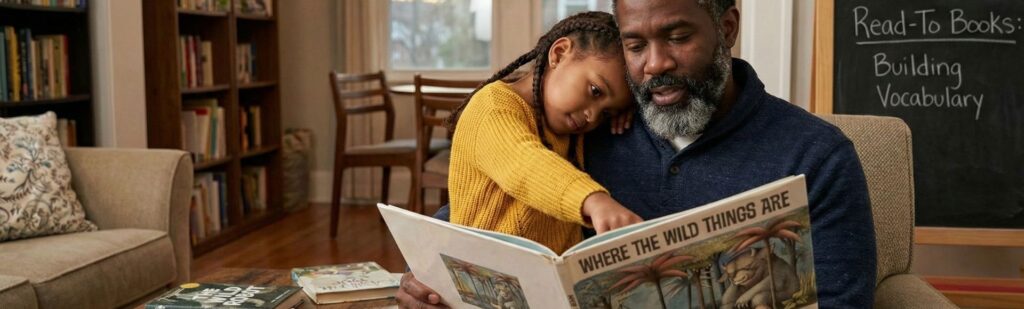
Read-To” Books (The Vocabulary Builders)
Who reads? You, the parent
Goal: To build vocabulary, explore complex stories, enjoy bonding time, and model fluent reading.
Choose stories that stretch their imagination — picture books or chapter books with rich language like Charlotte’s Web or Where the Wild Things Are.
Examples: Classic picture books with sophisticated vocabulary, chapter books above their reading level (like The Wild Robot, The Magic Tree House series), or beautifully illustrated books with layered meanings.
Important: Both modes are essential! Read-By books build skill and autonomy. Read-To books build language, comprehension, and imagination. Your child needs both to thrive as a reader.
The Goldilocks Book Selection Guide
Now that you know the two kinds of reading experiences, let’s explore what makes a book feel “just right” for your child’s next step. When books feel manageable, children’s nervous systems stay calm — and calm brains are curious brains.
For "Read-By" Books: The Three Zones
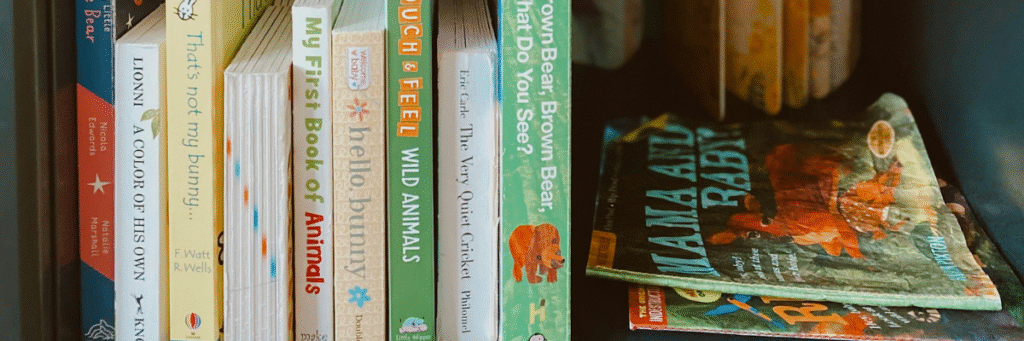
How do you know if a book is too easy, too hard, or just right for your child to read independently?
Most parents guess. But there’s a better way.
This three-zone framework shows you exactly what “just right” looks like—from accuracy rates to body language clues. You’ll discover where growth actually happens (hint: it’s NOT in the comfort zone), and learn a foolproof 30-second test that tells you instantly whether your child should read a book alone, with your help, or just listen while you read it aloud.
Stop guessing. Start knowing.
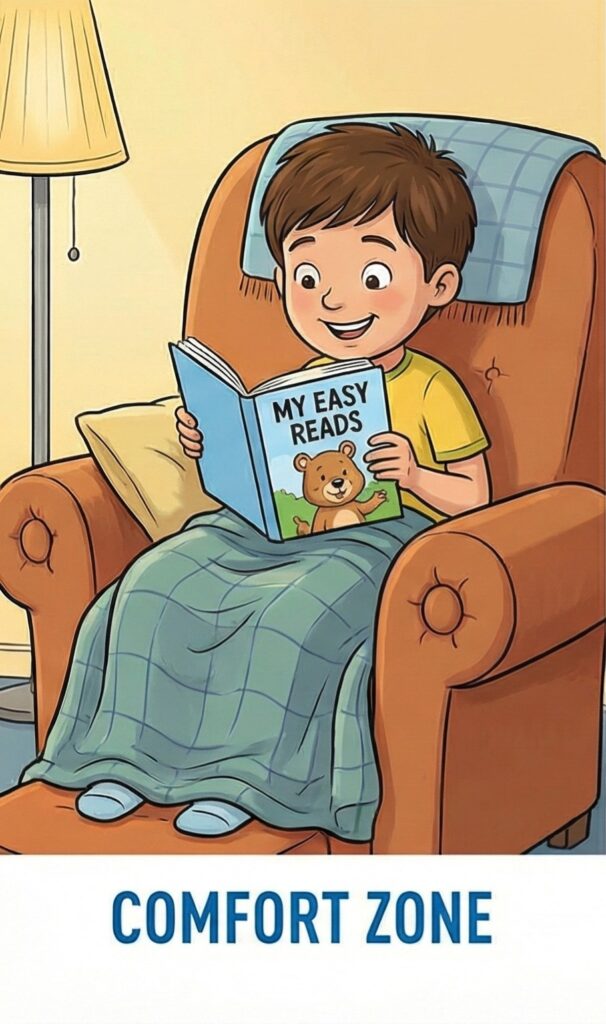
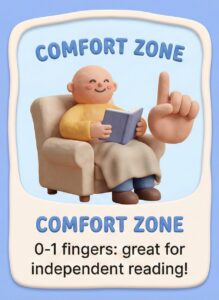
Comfort Zone (Independent Level)
What it looks like:
- Your child reads smoothly with 95-100% accuracy
- Fewer than 1 unknown word per 20 words
- They understand the story without help
- Body is relaxed, voice is confident
When to use: When your child needs to practice fluency, build confidence, or read alone. Perfect for bedtime reading or independent reading time.
The Five-Finger Test (A Quick Check)
Open to a random page. Have your child read it aloud. Each time they don’t know a word, they put up one finger.
- 0-1 fingers: Comfort Zone (great for independent reading!)
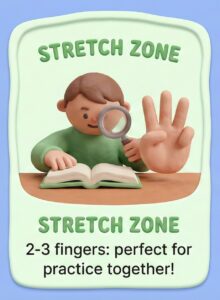
- 2-3 fingers: Stretch Zone (perfect for practice together!)
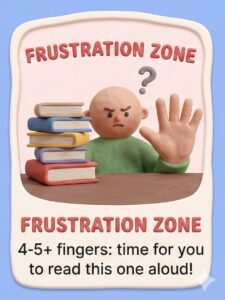
- 4-5+ fingers: Frustration Zone (time for you to read this one aloud!)
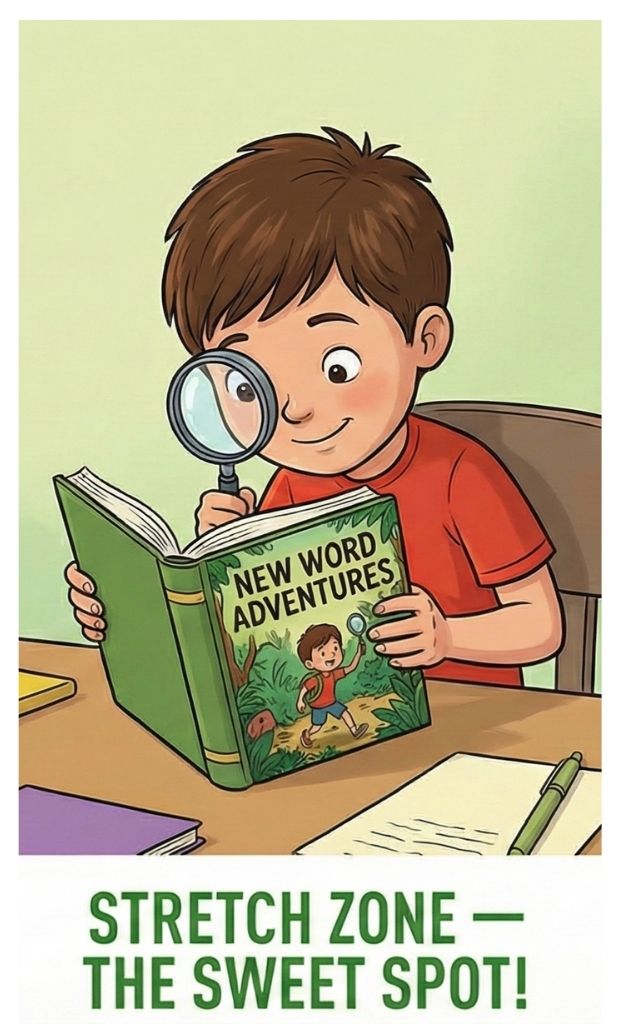
Stretch Zone (Instructional Level) — The Sweet Spot!
What it looks like:
- Your child reads with 90-94% accuracy
- About 1-2 unknown words per line, but they can figure them out with your help
- They understand most of the story and can answer questions
- Challenging but not overwhelming
When to use: This is where learning happens! Use these books during your focused reading practice sessions. This is where growth blooms.
Think of it like: A playground slide that’s just steep enough to be exciting but not scary. They feel the challenge, but they’re still in control.
The Five-Finger Test (A Quick Check)
Open to a random page. Have your child read it aloud. Each time they don’t know a word, they put up one finger.
- 0-1 fingers: Comfort Zone (great for independent reading!)
- 2-3 fingers: Stretch Zone (perfect for practice together!)
- 4-5+ fingers: Frustration Zone (time for you to read this one aloud!)
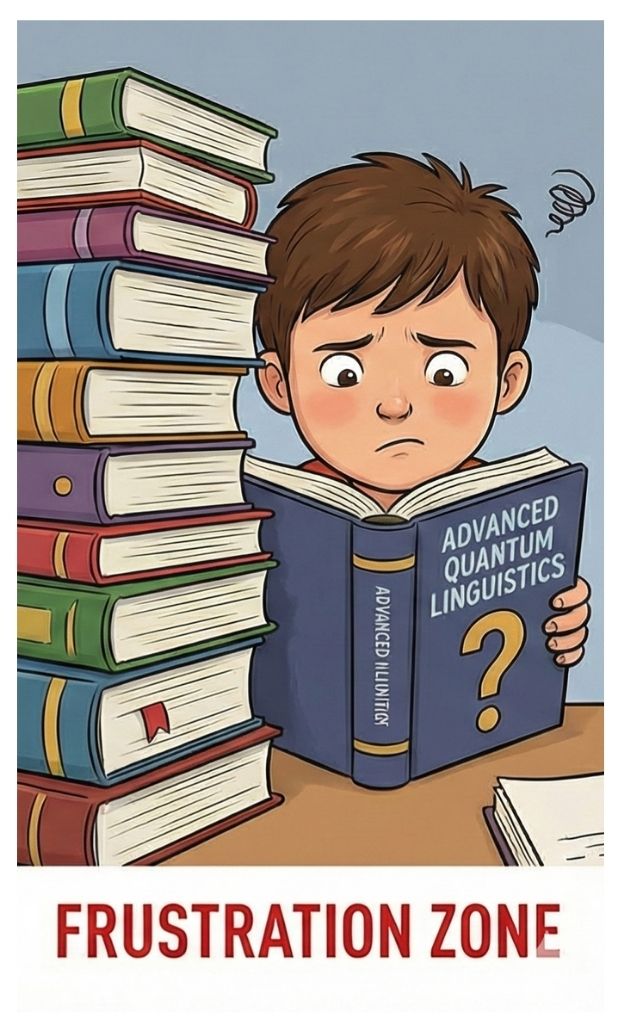
Frustration Zone
What it looks like:
- Your child reads with less than 90% accuracy
- More than 2 unknown words per line
- They lose meaning and have to reread frequently
- Signs of stress: sighing, fidgeting, giving up
When to use: These books belong in the “Read-To” category! You read them aloud while your child listens and enjoys. Save these for vocabulary-building read-aloud time.
The Five-Finger Test (A Quick Check)
Open to a random page. Have your child read it aloud. Each time they don’t know a word, they put up one finger.
- 0-1 fingers: Comfort Zone (great for independent reading!)
- 2-3 fingers: Stretch Zone (perfect for practice together!)
- 4-5+ fingers: Frustration Zone (time for you to read this one aloud!)
Balance Complexity & Familiarity
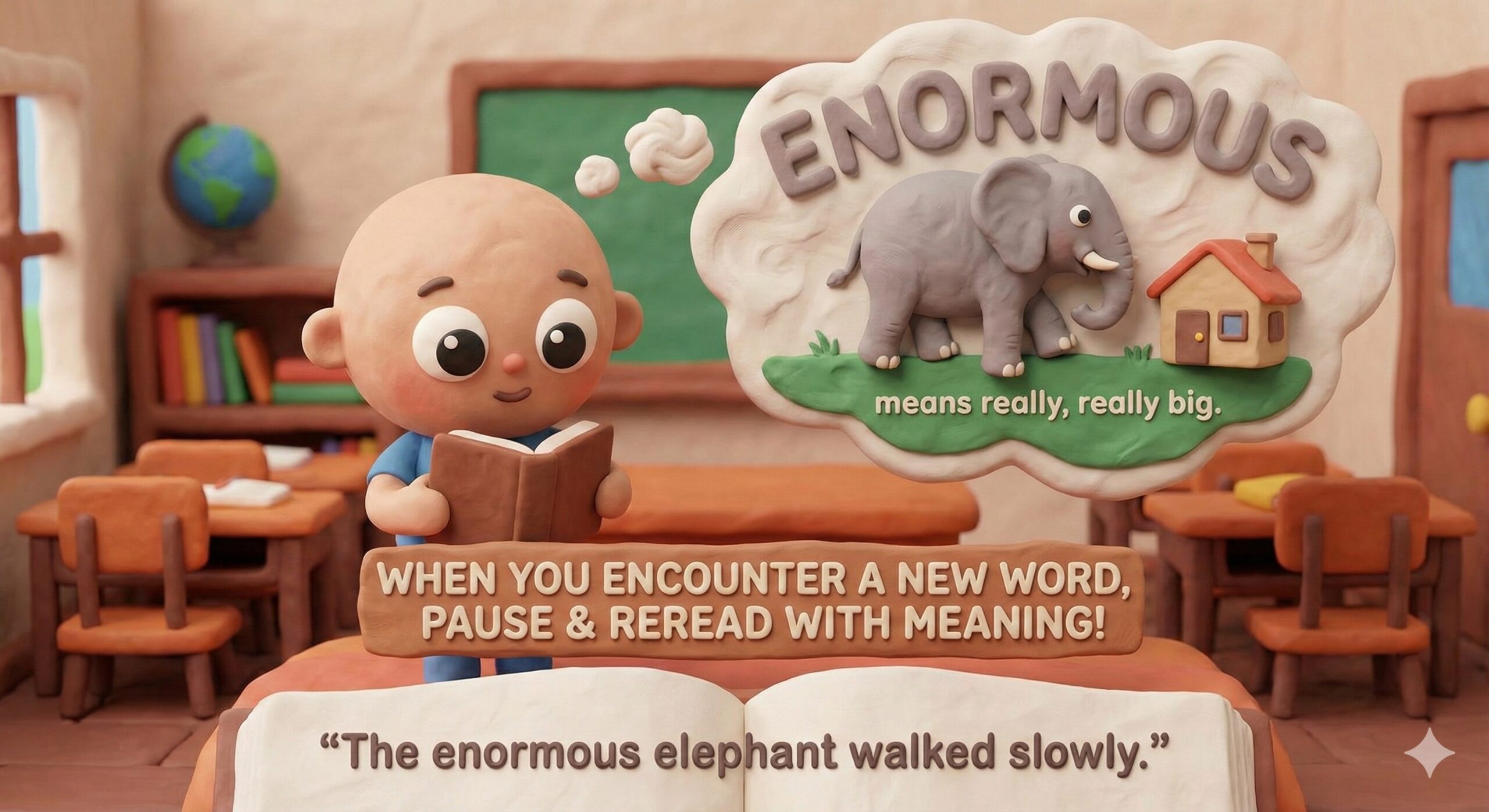
For Read-To books, aim for about 3–5 unfamiliar words per page — enough to stretch vocabulary without losing flow. Pro Tip: When you encounter a new word, pause naturally and reread the sentence with the meaning in mind. "Enormous means really, really big. 'The enormous elephant walked slowly.'"